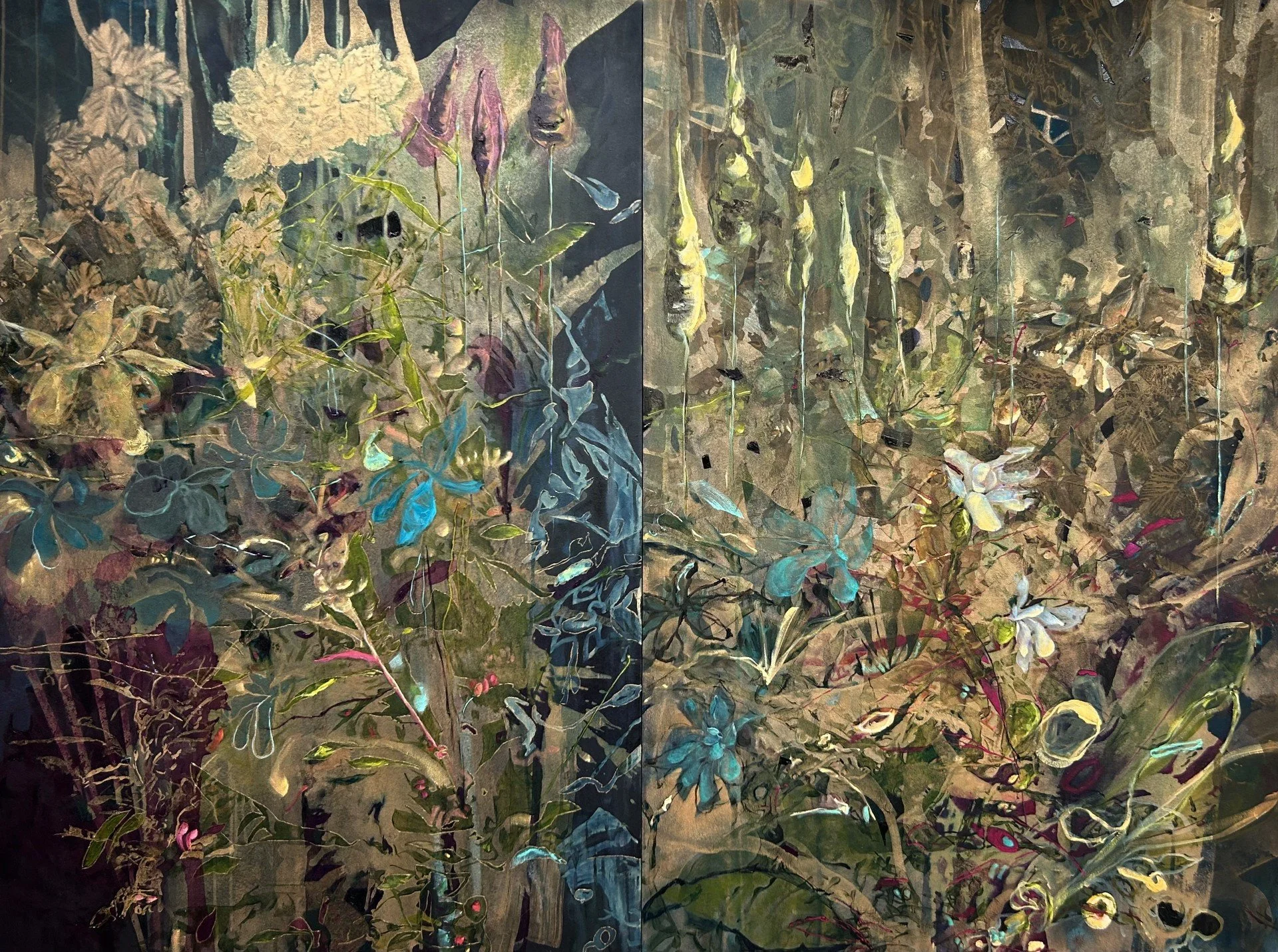
Gravity’s Law (Rilke), 2025, 60” x 80,” acrylic on canvas

Navigating the Stars with Moths, 2026, 40” x 60,” acrylic on canvas

Viability’s Longing, 40” x 60,” 2026, acrylic on canvas

The Holy Repair, 50” x 60,” acrylic on canvas
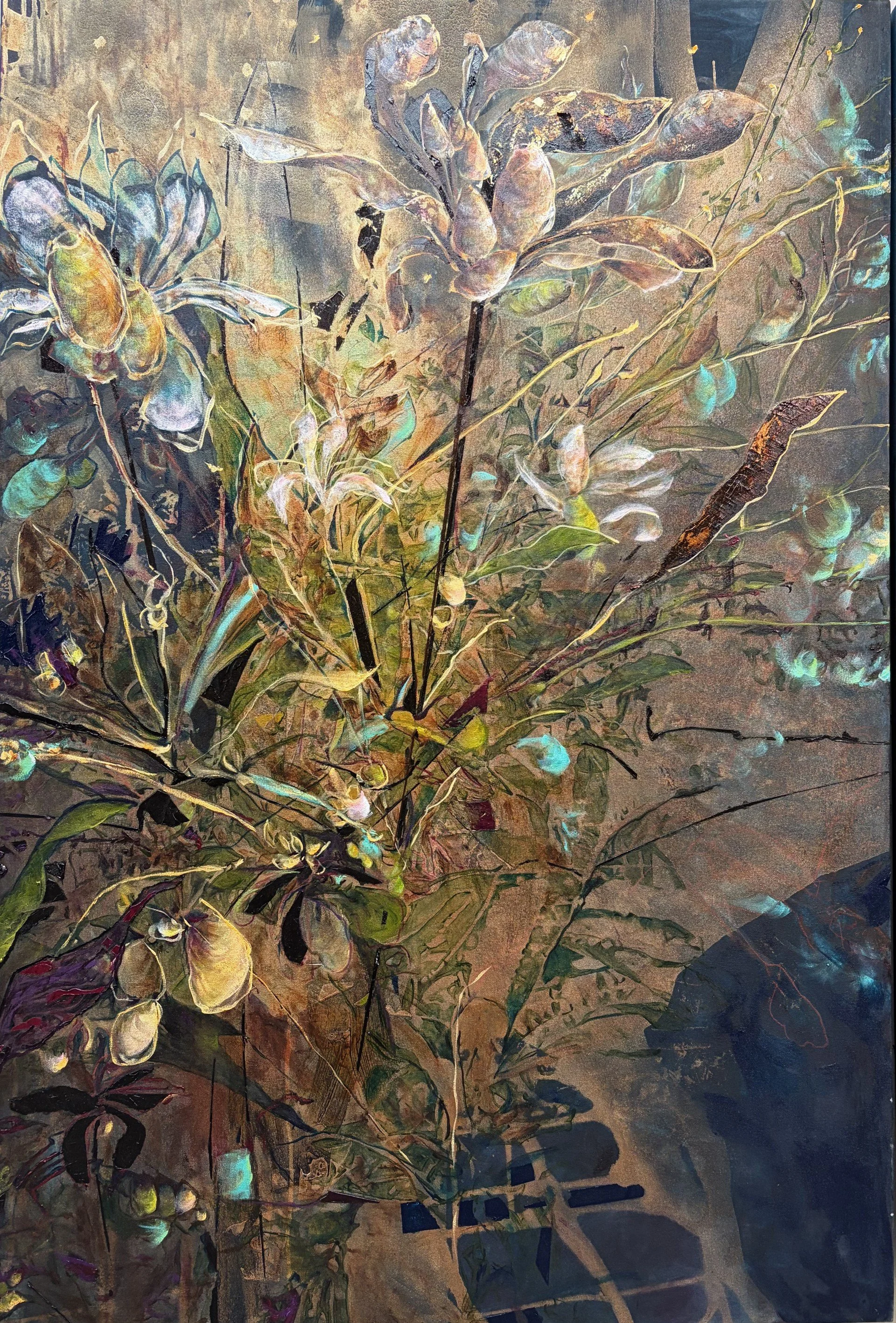
Magnolia’s Desire, 2026, 40” x 60” acrylic on canvas

And Yet the Flowers Still Bloom, 2026, 44” x 50” acrylic on canvas

Listening for the Lyrics, 2026, 128” x 60” acrylic on canvas

Listening for the Lyrics, studio

Here & There I have Seen the Holy Place, 60” x 80,” acrylic on canvas

Eaarth Rise Amen, 2023, 60” x 66” acrylic on canvas
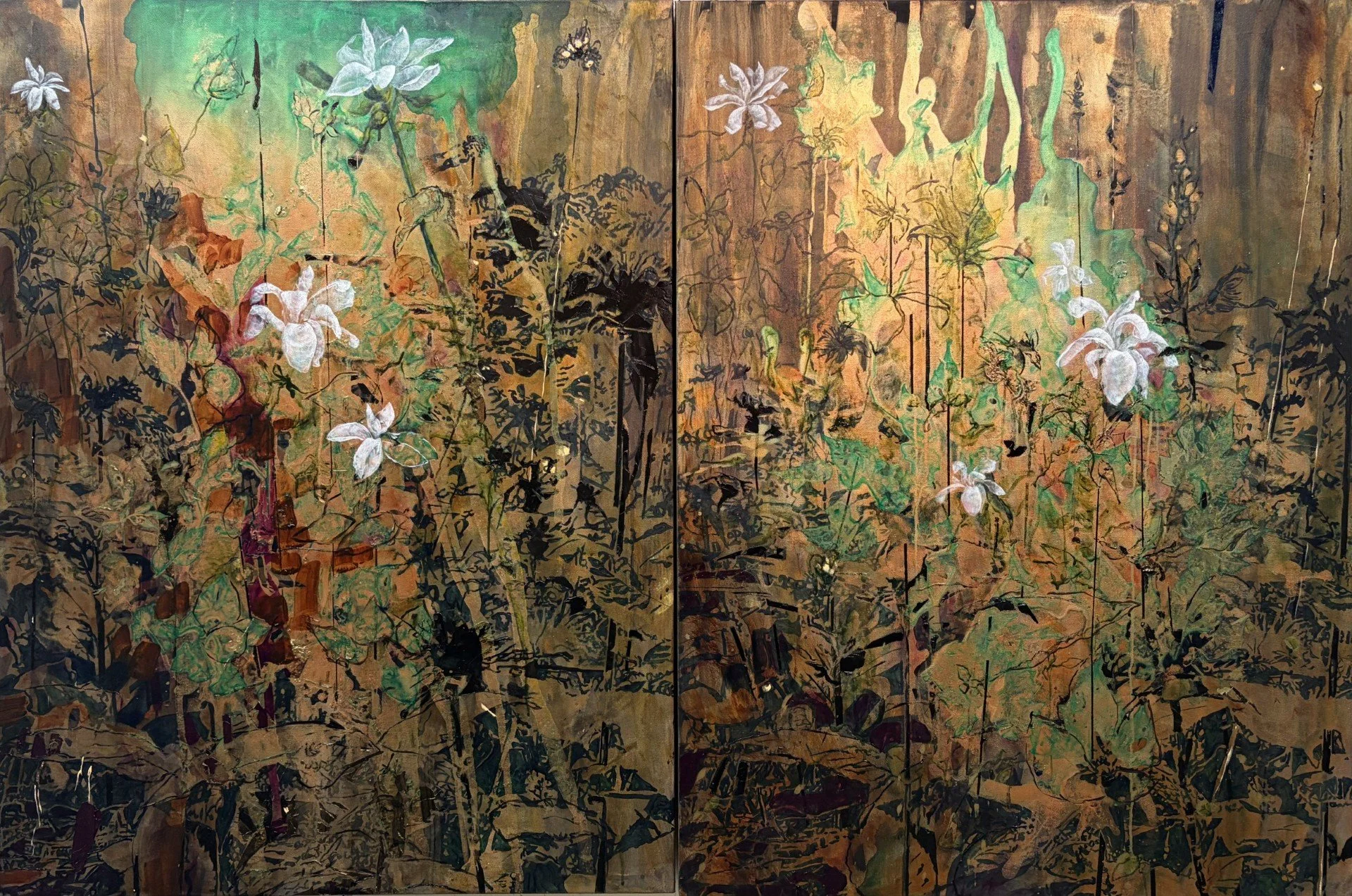
Listening for the Meter of Eternity (Ursula Le Guin), 2026, 50” x 80” acrylic on canvas
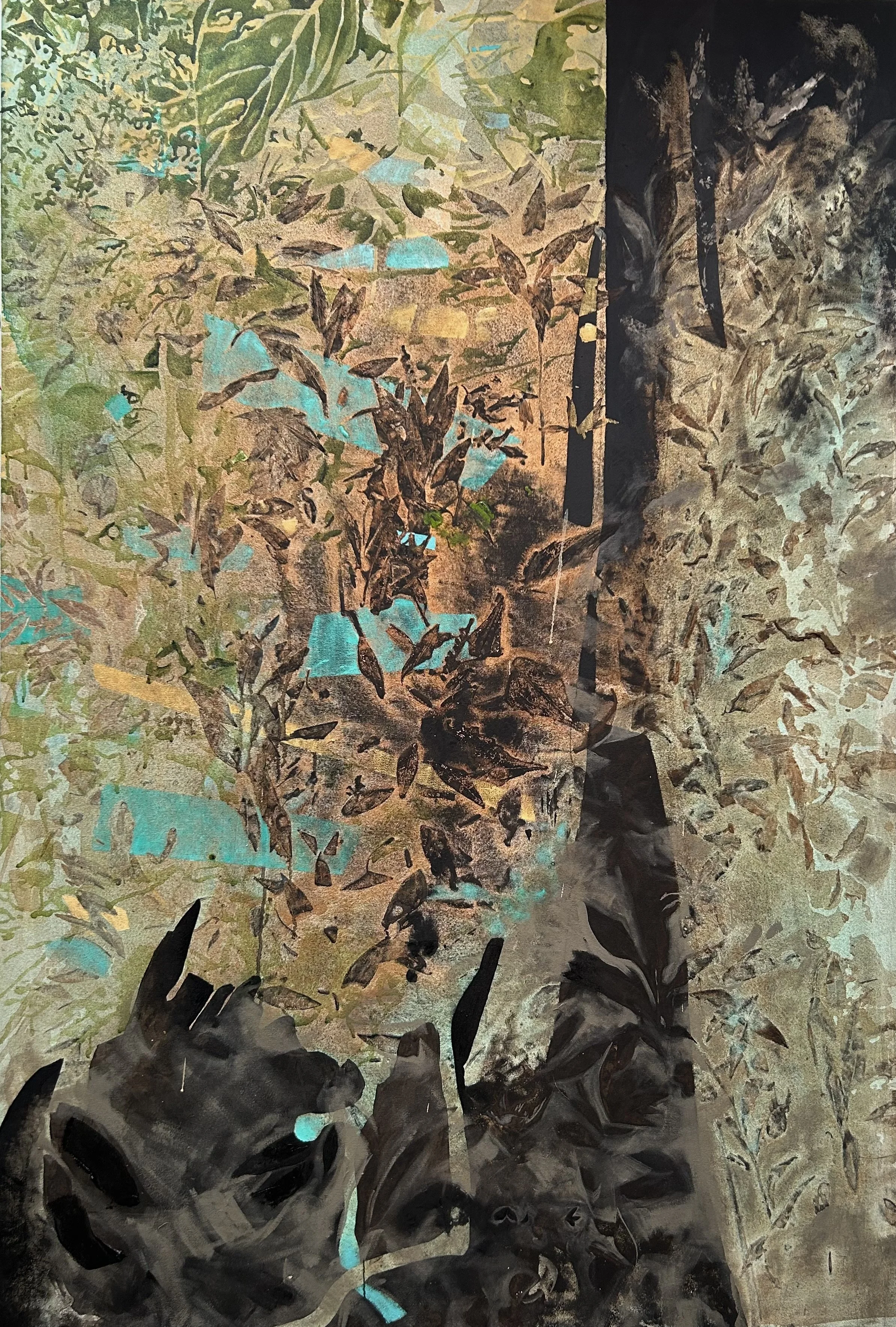
Nocturne, 2023, 60” x 40” acrylic on canvas
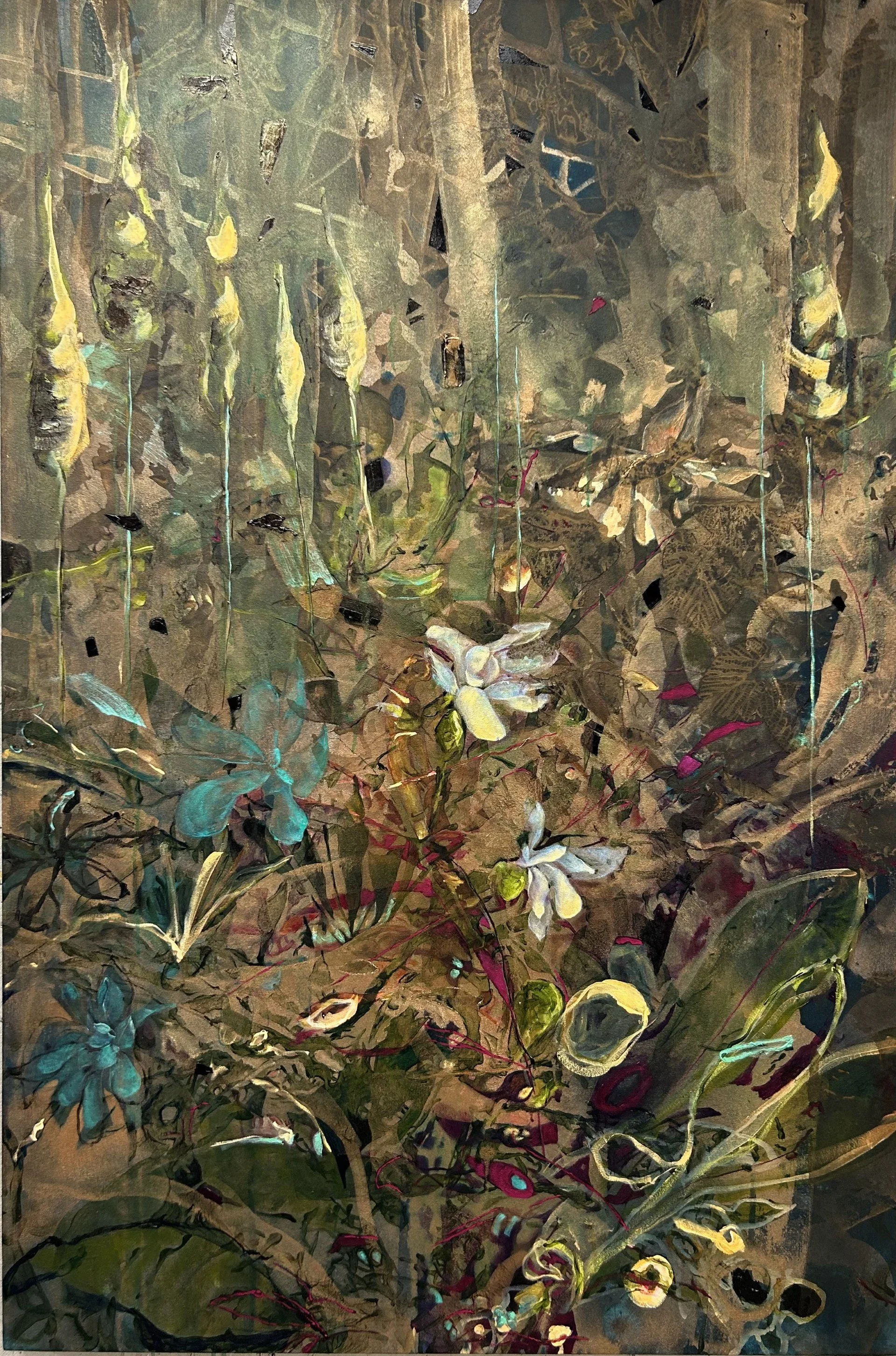
Gravity’s Law (Rilke), 2024, 60” x 40” acrylic on canvas
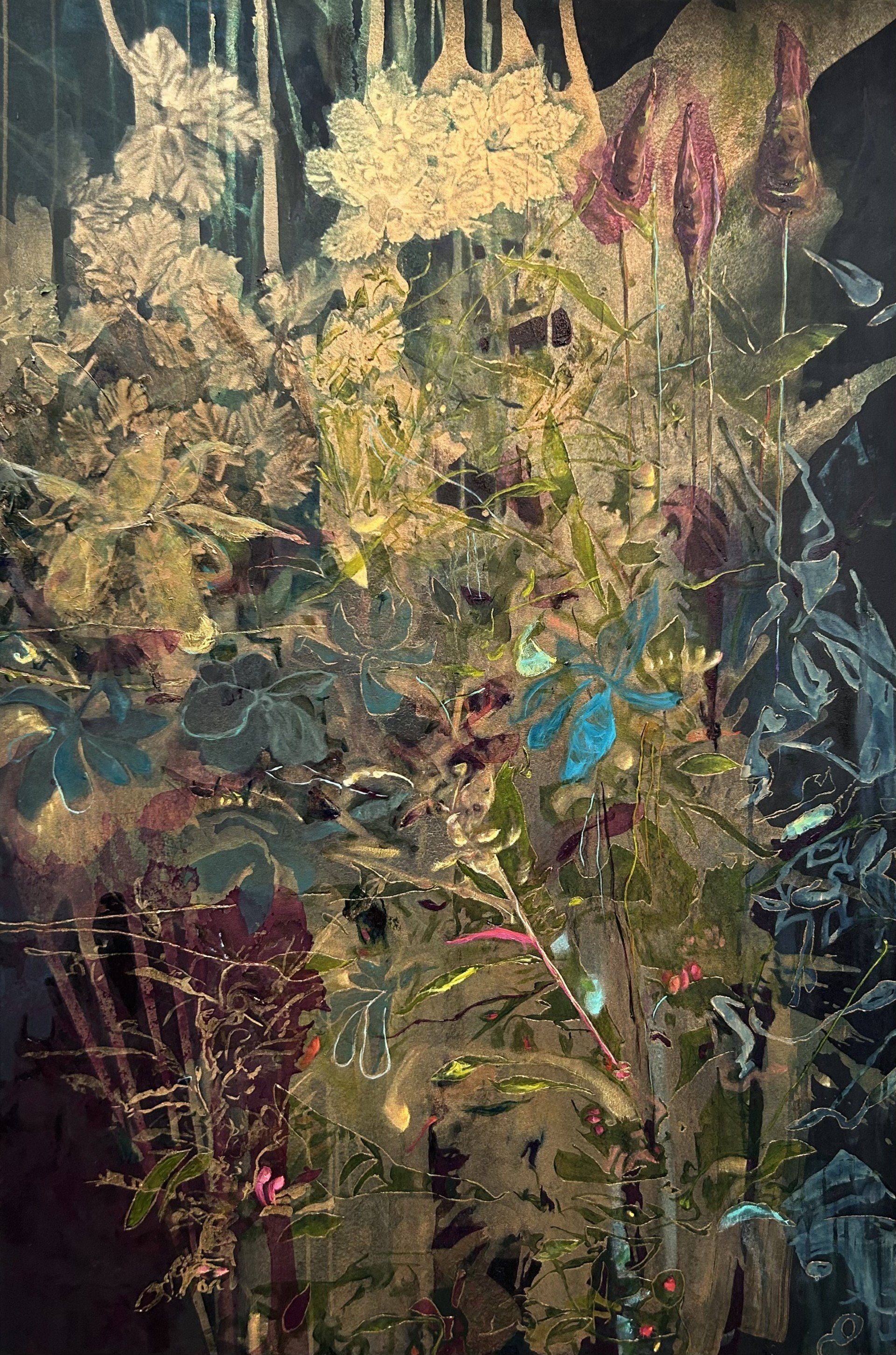
Storied Object - Communion of Subjects, 60” x 40” acrylic on canvas
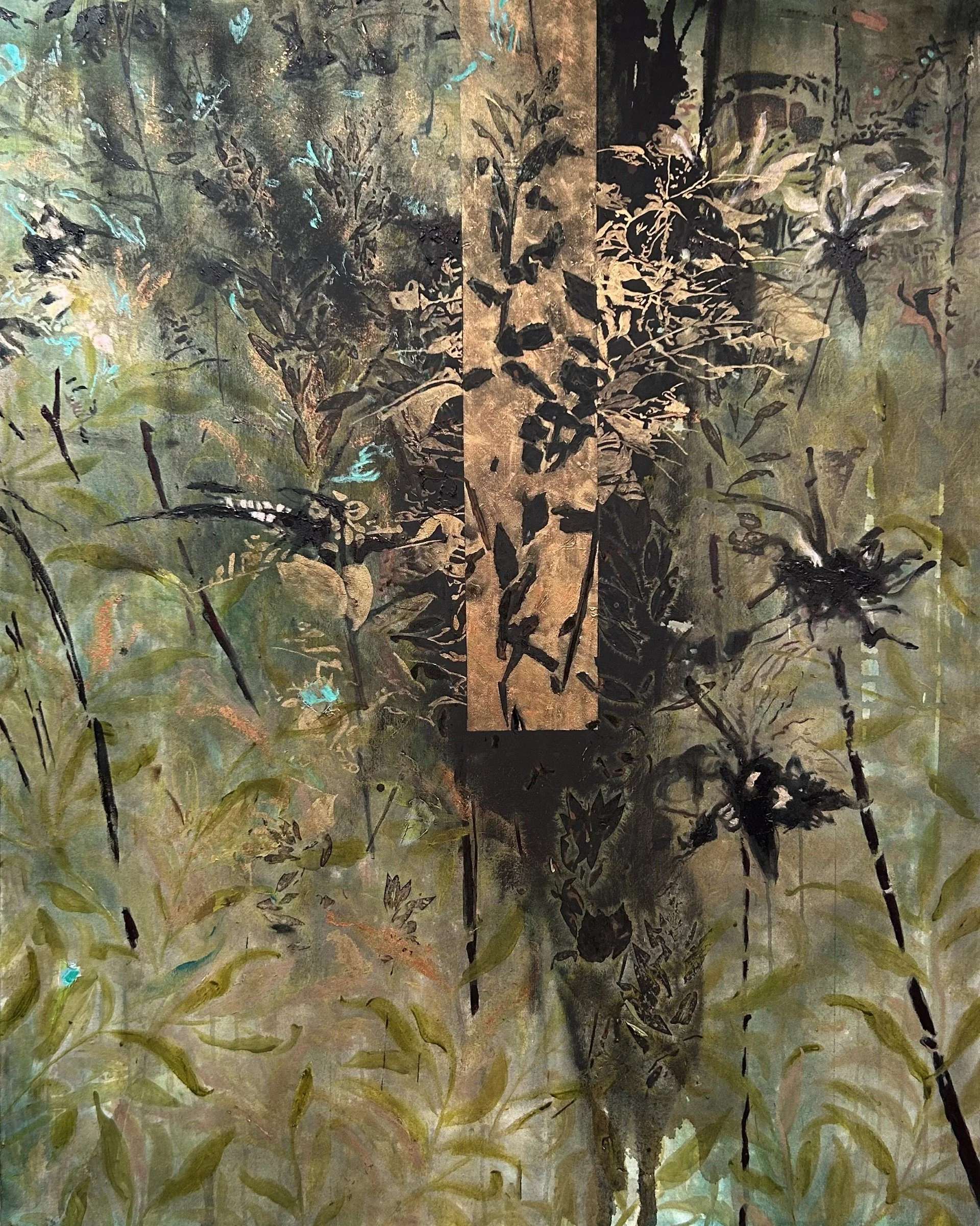
Repair, 2024, 60” x 44” acrylic on canvas
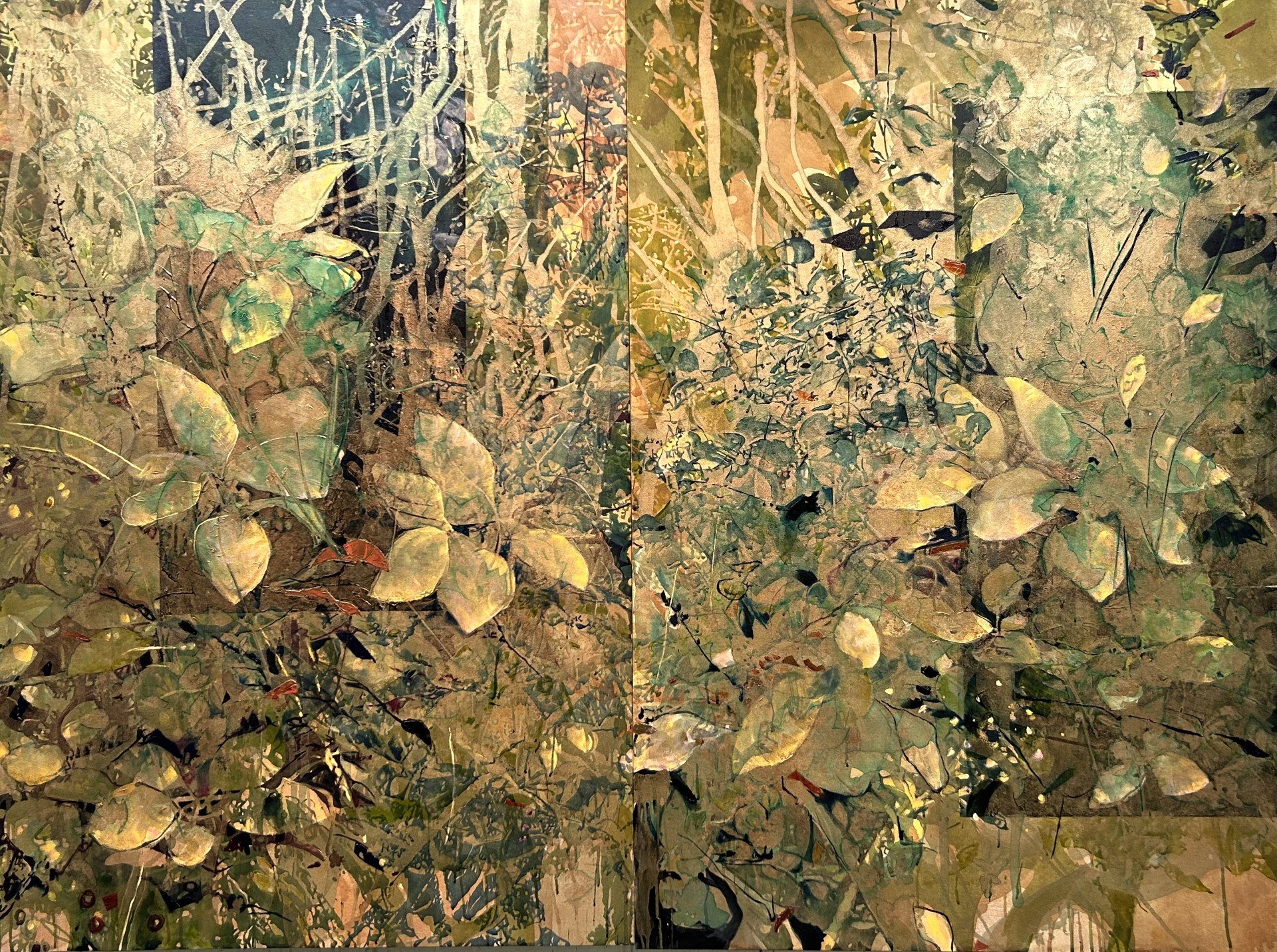
Listening for the Lyrics, 2025, 60” x 80” acrylic on canvas
BCA Burlington City Arts, Burlington, Vermont
Dark Botanica October 16, 2026 — January 23, 2027
Dark Botanica explores how contemporary artists are reimagining the symbolism of flowers and plants, which in art history have long been associated with beauty, fragility, and romance. Diving into darker associations with transformation, desire, mortality, and crisis, the featured artists work across a wide range of media and present botanical forms that mutate, bloom from darkness, or emerge as surreal hybrids that straddle the boundaries between natural and artificial. Together, these works reveal flora not as passive objects of admiration, but as agents of internal struggle, feminist reimagination, and environmental critique.
Artists: Alina Bliumis, Cameron Davis, Dylan Griffin, Marcie Scudder, Megan Bogonovich, Sian Fan, and Sage Tucker-Ketcham
BCA’s fall exhibitions are supported in part by the Maslow Family Foundation. Hospitality sponsors: Sugarsnap and Lake Champlain Chocolates. Burlington City Arts is supported in part by the Vermont Arts Council & the National Endowment for the Arts.
Dark Botanica Series: Cameron Davis
The themes in the exhibition Dark Botanica invite us to the edge of mystery – a place my work has always explored. For me, darkness is neither evil nor grotesque, but rather evokes potentiality, fecundity, interiority, and the feminine --- the generative space from which all life emerges. The dark is like the first breath of the cosmos, or communicating mycelium beneath the soil, or the womb: a realm of listening, receiving, and becoming.
I experience both grief and joy coexisting in the paintings — where the interplay of dark and light inhabit kindred territory. As Leonard Cohen sang, grief cracks open our hearts to let the light in or calls us to gratitude for this one precious life. (Mary Oliver).
For many years I have explored my sense of presence within this living encounter, particularly in forests, on mountain tops, and more recently in my garden. Painting becomes a way of investigating the permeability between inside and outside, between what is felt and what is observed, between the transcendent and the inscendent.
This perception of a deeply entangled world of reciprocal relationships, influences, and ongoing transformations between humans, the more-than-human, the living Earth and living Cosmos, drive the paintings’ visual language.
Plant patterns could be seen as the paintings’ subject — but I also see them as collaborators. Through observational renderings, tracing projected photos, or taking impressions of actual plants, I experience seeing as a form of active visual listening. This becomes a way of engaging with their intelligence, noting their displays as their specific adaptive expressions of life.
The plant patterns also serve as the basis of improvisation. And I have come to understand that improvisation itself reveals life’s processes. The act of painting is a complex integration of concepts, associations, optics, materials, and embodied rhythms with dynamically arising insights and intuitional reckonings. In this sense, I like to replace the worn adage that “art imitates life," where the word imitation implies separation, the very root of our human problems, with "art is life"—a living process of experimentation, adaptation, communication and emergence.
August 2026